Posted October 12, 2026

By Enrique Abeyta
The AI House of Cards: Wall Street’s Trillion-Dollar Bet
I remember late 1999 like it was yesterday.
I was working at a New York City hedge fund, Red Coat Capital, and the internet was changing the world.
Telecom giants like AT&T, MCI WorldCom and Sprint were spending billions building the networks that would connect everyone to this revolutionary new technology.
And Wall Street couldn't get enough.
Companies like Cisco, Corning and Lucent Technologies supplied the equipment.
Business boomed, earnings soared, and investors were convinced spending would continue for years.
Why wouldn't it? The internet was clearly the future.
Lucent, one of the world's leading telecommunications equipment makers, seemed unstoppable.
Since its 1996 spinoff from AT&T, the company had beaten Wall Street's earnings expectations 14 quarters in a row.
Then, on Jan. 6, 2000, Lucent put the “surprise” in earnings surprise.
The company warned that quarterly earnings would fall roughly 29% short of Wall Street's expectations.
Its stock plunged up to 28% after the announcement, wiping out about $64 billion in market value.
Among the reasons Lucent gave for the shortfall? Changes in customer purchase timing.
The technological revolution hadn't ended. The internet hadn't stopped growing.
But one of its biggest suppliers had reminded investors of something they'd forgotten.
Even revolutionary technologies are vulnerable to ordinary business cycles.
Within months, the dot-com bubble began to burst.
Today, I see an unsettling resemblance in artificial intelligence.
The Trillion-Dollar Spending Boom
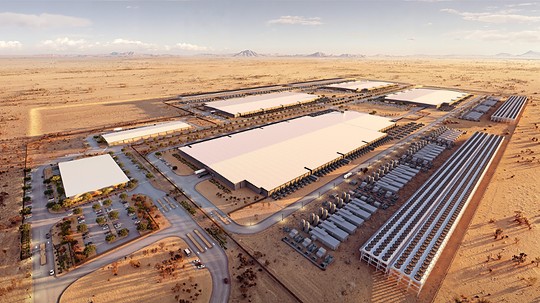
Microsoft, Amazon, Alphabet, Meta, and Oracle are spending hundreds of billions to build the data centers and infrastructure that power AI.
Meanwhile, Nvidia, Broadcom, AMD, and Micron supply much of the technology.
Once again, Wall Street expects the spending and earnings growth to continue for years.
And here's why this matters to virtually every investor.
The AI boom has become so enormous that a slowdown could shake the entire stock market.
In 2023, the five major hyperscalers collectively spent approximately $154 billion on capital expenditures.
By 2025, that figure had climbed to $416 billion.
And according to Vanguard, annual spending could approach $1.2 trillion by 2028.
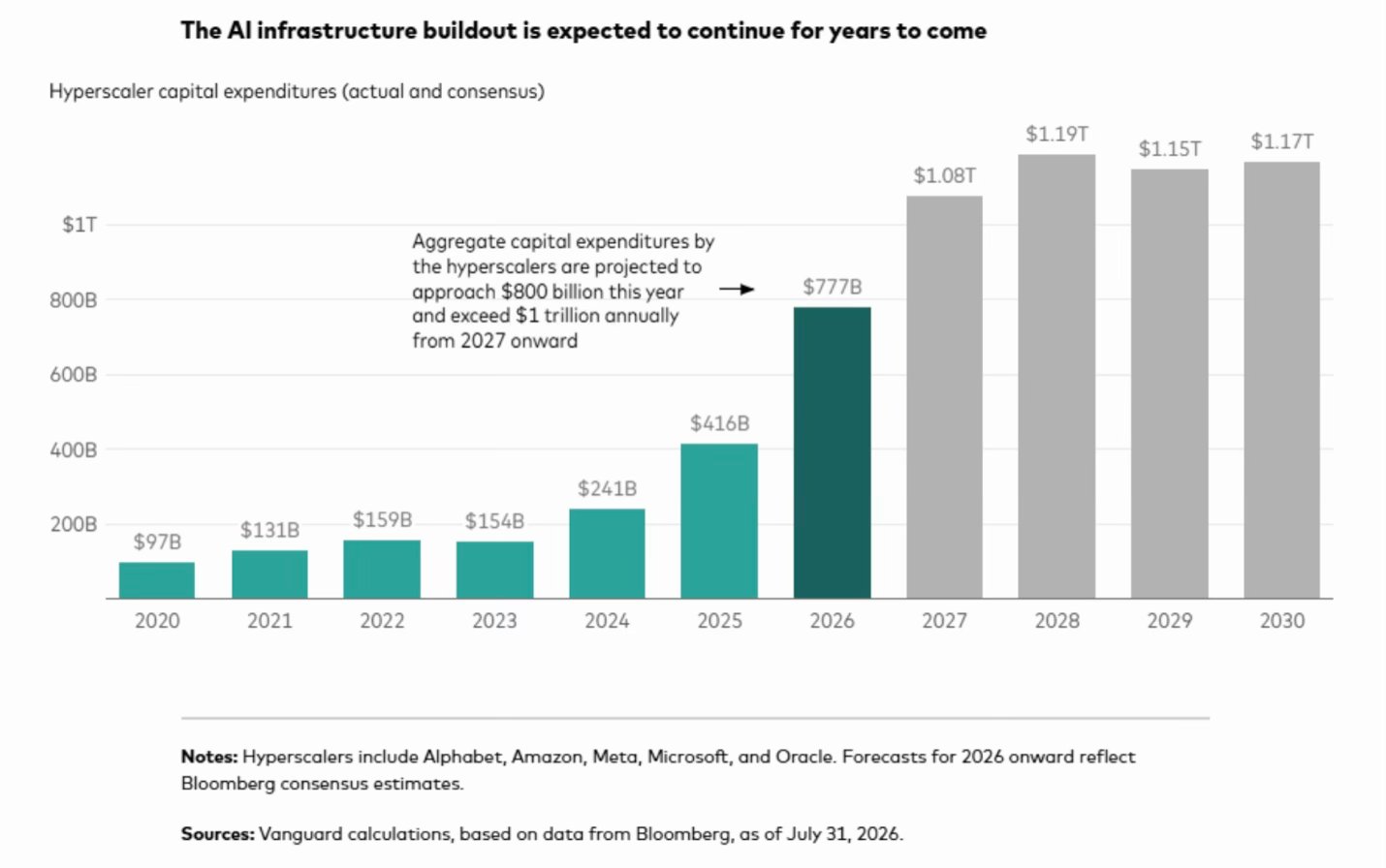 Hyperscaler Capital Spending: Actual & Projected Through 2030. Source: Vanguard
That's nearly eight times their 2023 spending in just five years.
But what's happening outside the AI boom?
Research highlighted by Porter & Co. shows that inflation-adjusted private construction spending outside data centers has declined by roughly $120 billion annually since 2024.
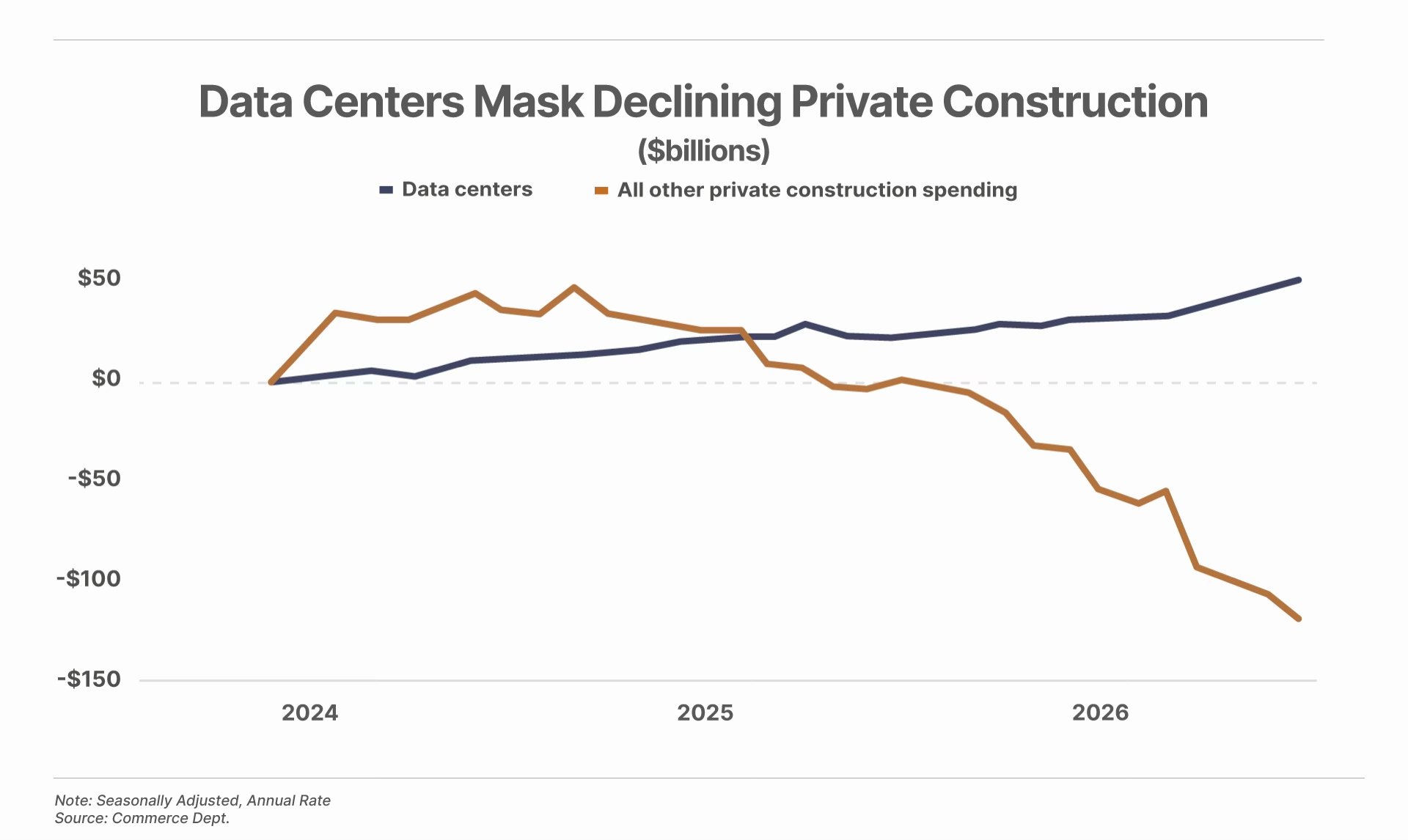 Source: Porter & Co., “The Coming OpenAI Meltdown.” Underlying data from U.S. Commerce Department.
While data center construction is surging, other types of private construction are moving in the opposite direction.
Every new data center also drives orders for chips, networking equipment, cooling systems, and electrical infrastructure.
Those orders become revenue for suppliers and underpin Wall Street's earnings forecasts.
The more businesses depend on AI spending, the more consequential even a modest slowdown becomes.
But someone has to pay for it all.
For years, Microsoft, Amazon, Alphabet, and Meta generated enough cash to finance almost anything they wanted.
AI is changing that equation.
According to Goldman Sachs, major hyperscalers could spend roughly 90% of their operating cash flow on capital expenditures over the next three years.
And the pressure is already showing up.
In the second quarter of 2026, Alphabet generated approximately -$5.9 billion in free cash flow.
Amazon recorded approximately -$7.7 billion.
Both companies remained profitable, but their capital spending exceeded operating cash flow.
And Wall Street expects the pressure to intensify.
According to Bank of America Global Investment Strategy, combined hyperscaler free cash flow could plunge from approximately $191 billion in 2025 to negative $26 billion in 2027.
And some forecasts suggest it could turn negative as early as 2026.
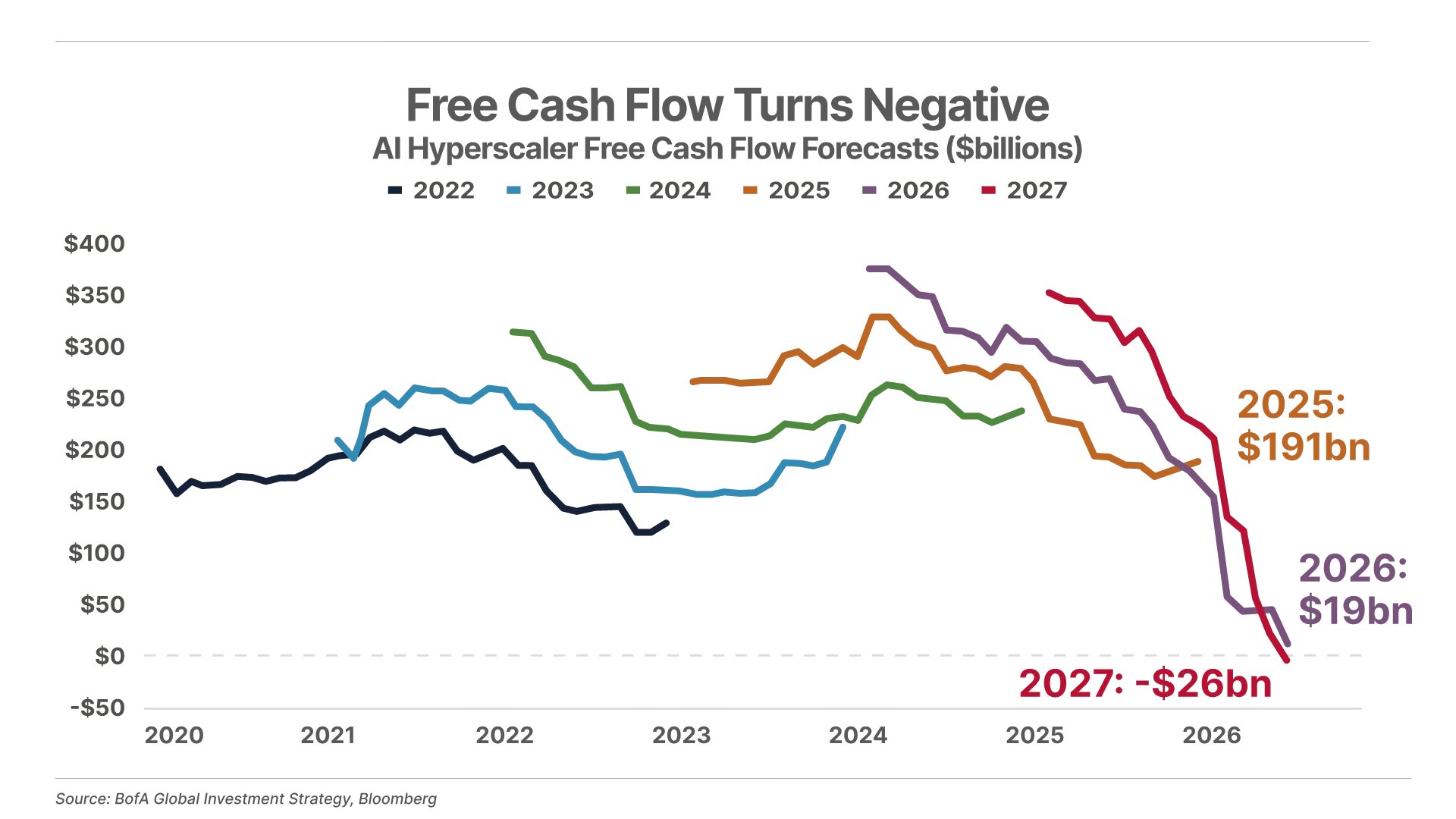 Source: Bank of America Global Investment Strategy, Bloomberg. Reproduced by Porter & Co.
These are forecasts, not guarantees. But they illustrate the challenge.
The AI buildout is consuming enormous amounts of cash today, while many expected returns remain years away.
So, companies are increasingly turning to another source of financing.
Debt.
The Debt Is Becoming Everyone's Problem
According to Vanguard, Alphabet, Amazon, Meta, Microsoft, and Oracle issued about $130 billion in U.S. bonds in the first seven months of 2026 alone.
That's more than they issued during all of 2025.
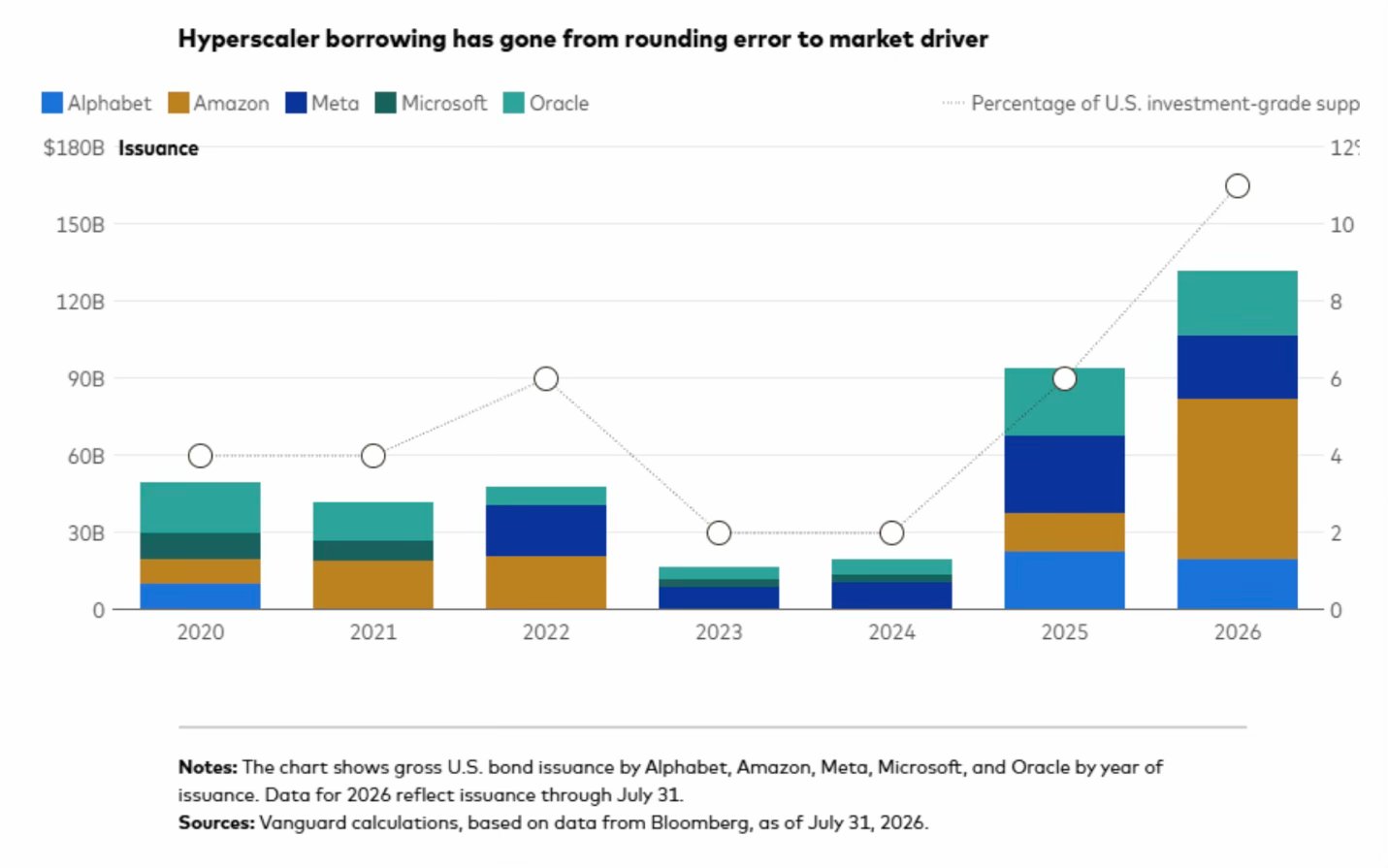 Hyperscaler U.S. Bond Issuance, 2024–July 2026. Source: Vanguard
Borrowing isn't necessarily bad, and not every dollar finances AI.
But Oracle shows how stretched spending can get.
Its capital expenditures reached approximately 174% of operating cash flow in fiscal 2026. In July, S&P Global Ratings downgraded Oracle's credit rating to BBB-, just one notch above junk.
And the financing extends beyond the hyperscalers.
Ares Management examined more than 100 infrastructure financing transactions and identified roughly $573 billion in financing arrangements connected to a relatively small group of major technology companies.
That doesn't mean those companies own all this debt.
It means the same businesses keep appearing throughout the financing network.
If AI spending slows, the consequences could spread to lenders, infrastructure investors and equipment suppliers.
And money isn't the only obstacle.
Data centers also face electricity shortages, permitting delays and local opposition.
When a project slips, equipment orders can slip with it.
Which brings us back to Lucent.
Lucent's customers didn't abandon the internet. They changed when they were buying equipment.
Today, AI suppliers face a similar vulnerability.
Their earnings forecasts depend on customers continuing to spend extraordinary amounts of money.
But what if financing costs rise? What if a data center can't secure enough electricity? Or a major customer postpones its next round of orders?
Stock prices can fall long before capital spending actually declines.
The chart below compares stock prices and capital expenditures across five major investment booms.
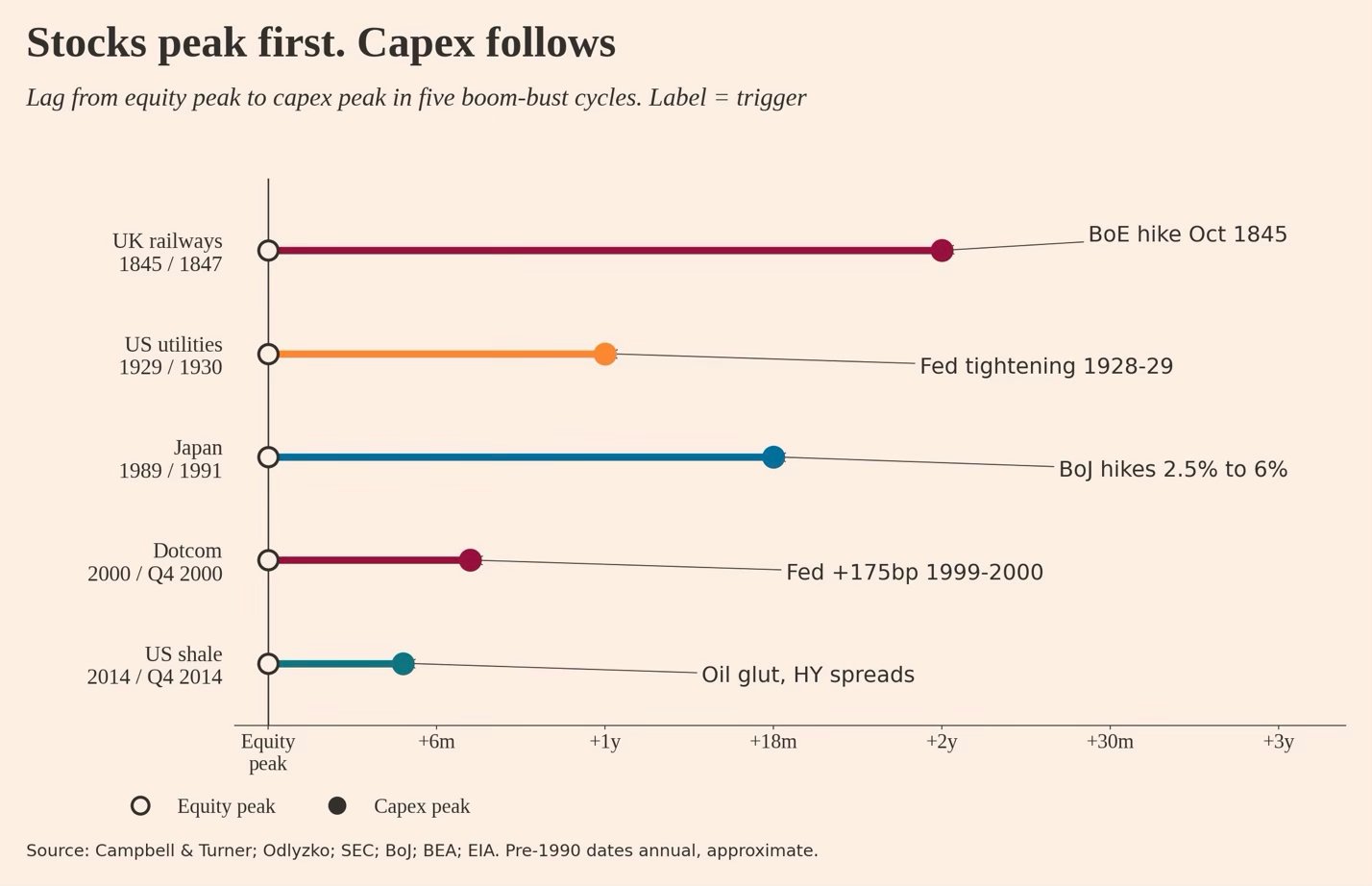 Source: A Wealth of Common Sense. Underlying data: Campbell & Turner, Odlyzko, SEC, Bank of Japan, BEA and EIA.
During the dot-com boom, stock prices peaked roughly six months before capital spending peaked.
Investors didn't wait for companies to stop buying equipment. They began selling when confidence in future growth weakened.
That doesn't mean AI stocks must follow the same path.
But AI spending could keep growing even as the stocks benefiting from it start to fall.
And the consequences wouldn't necessarily stop with AI stocks.
As J.P. Morgan's chart shows, the 10 largest companies now account for approximately 41% of the S&P 500's total market value.
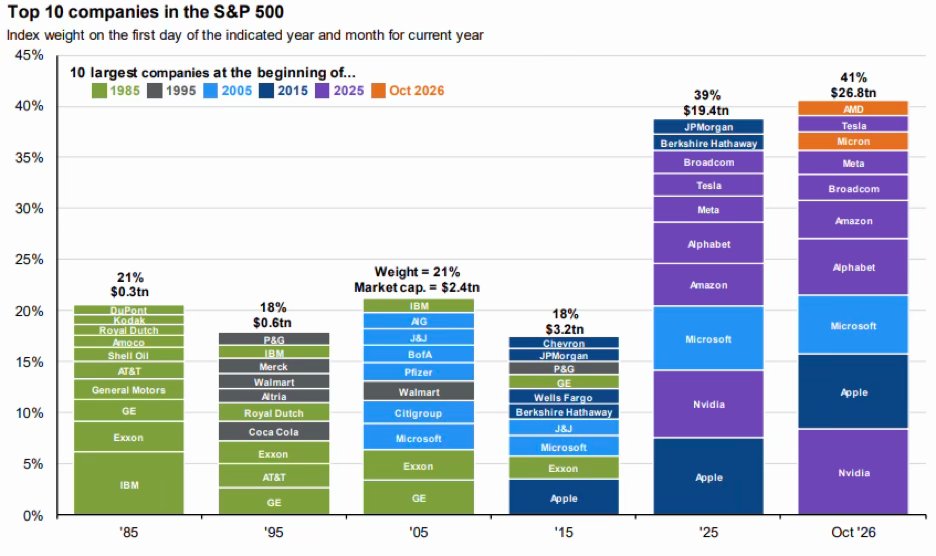 Source: J.P. Morgan Asset Management
Several of those companies are at the center of the AI boom.
So even investors who have never purchased NVIDIA or Microsoft could feel the effects through their index funds and retirement accounts.
The Lesson Wall Street Forgot
Here's what makes this situation so dangerous.
AI doesn't have to fail.
The technology can transform the world. Data centers can keep getting built. Chipmakers can keep selling billions of dollars' worth of equipment.
And investors could still lose a fortune.
Because Wall Street isn't simply betting that AI will succeed.
It's betting that hundreds of billions of dollars in infrastructure spending will arrive on schedule, year after year.
That's a very different bet.
I'll be watching for changes in hyperscaler spending plans, financing conditions, and supplier earnings guidance.
In January 2000, Lucent taught investors a painful lesson: When customers buy equipment can matter just as much as how much they buy.
Twenty-six years later, Wall Street may be about to learn that lesson all over again.
And that’s what makes today’s AI boom so vulnerable.
The AI house of cards doesn't need a technological disaster to collapse. It may only take a few of its biggest customers to stop spending.
Sign Up Today for Free!
Truth & Trends brings you market insights and trading tips you won't find anywhere else — unless you have your own personal hedge fund manager on speed dial...
Meet Enrique Abeyta, one of Wall Street’s most successful hedge fund managers. With years of experience managing billions of dollars and navigating the highs and lows of the financial markets, Enrique delivers unparalleled market insights straight to your inbox.
In Truth & Trends, Enrique shares his personal take on what’s moving the markets, revealing strategies that made him a star in the world of high finance. Whether it’s uncovering the next big trend or breaking down the hottest stocks and sectors, Enrique’s insights are sharp, actionable, and proven to work in any market condition.
Inside these daily updates, you’ll gain:
- 50 years of combined trading wisdom distilled into actionable insights.
- A behind-the-scenes look at how Wall Street pros spot opportunities and avoid pitfalls.
- Exclusive strategies that Enrique personally uses to deliver exceptional returns — no fluff, just results.
To have Truth & Trends sent directly to your inbox every weekday, just enter your email address below to join this exclusive community of informed traders.
Don’t miss your chance to learn from one of the best in the business.
Sign up now and take your trading game to the next level.

AI Is Now “Too Big to Fail”
Posted October 08, 2026
By Enrique Abeyta

MU Are You Ok? Are You Ok MU?
Posted October 07, 2026
By Nick Riso
Micron Could Get Cut in Half. Here’s Why.
Posted October 05, 2026
By Enrique Abeyta

The AI “Mega-Theme” Nobody’s Talking About Yet
Posted October 02, 2026
By Greg Guenthner
Here Lies the AI Trade (2022-2026)
Posted October 01, 2026
By Enrique Abeyta