Posted October 15, 2026

By Enrique Abeyta
The AI House of Cards II: First One to Fall
The AI boom is feeding itself.
OpenAI is promising to spend enormous sums on computing power.
Cloud providers and data center developers are raising and borrowing billions to build the infrastructure OpenAI needs.
That money then flows to companies like NVIDIA, which sells the chips powering those data centers.
NVIDIA, in turn, helps finance parts of the system that are buying its chips.
One company’s spending becomes another company’s revenue. That revenue supports still more spending. And around and around it goes.
So far, that loop has been enormously profitable. But it also ties their fortunes together, with each company’s growth helping fuel the next.
And one thing I’ve learned on Wall Street is that you should never assume that money will keep flowing endlessly.
On Monday, in Part I of The AI House of Cards, I took you back to the dot-com boom and what can happen when customers don’t buy as much, or as quickly, as the market expects.
Today, I want to look more closely at how that same risk is taking shape at two of the most important companies in the current AI spending cycle: OpenAI and NVIDIA.
One is making giant financial commitments. The other is generating giant profits fulfilling them.
And trouble at either end could have consequences far beyond those two companies.
OpenAI: The First Domino
OpenAI helped ignite the modern AI revolution and turned ChatGPT into a household name.
Businesses are racing to adopt its technology. Investors, meanwhile, have poured vast sums into the company.
But OpenAI faces a major financial challenge…
It has reportedly committed to approximately $750 billion in computing expenditures through 2030.
That's money needed for the data centers, chips and computing services behind its AI models.
Put that figure next to OpenAI's annualized revenue, which reportedly approached $50 billion in September and you begin to see the issue.
$50 billion is remarkable growth, but revenue isn't profit. And OpenAI isn't earning nearly enough cash to cover its future commitments.
Consider the following forecast.
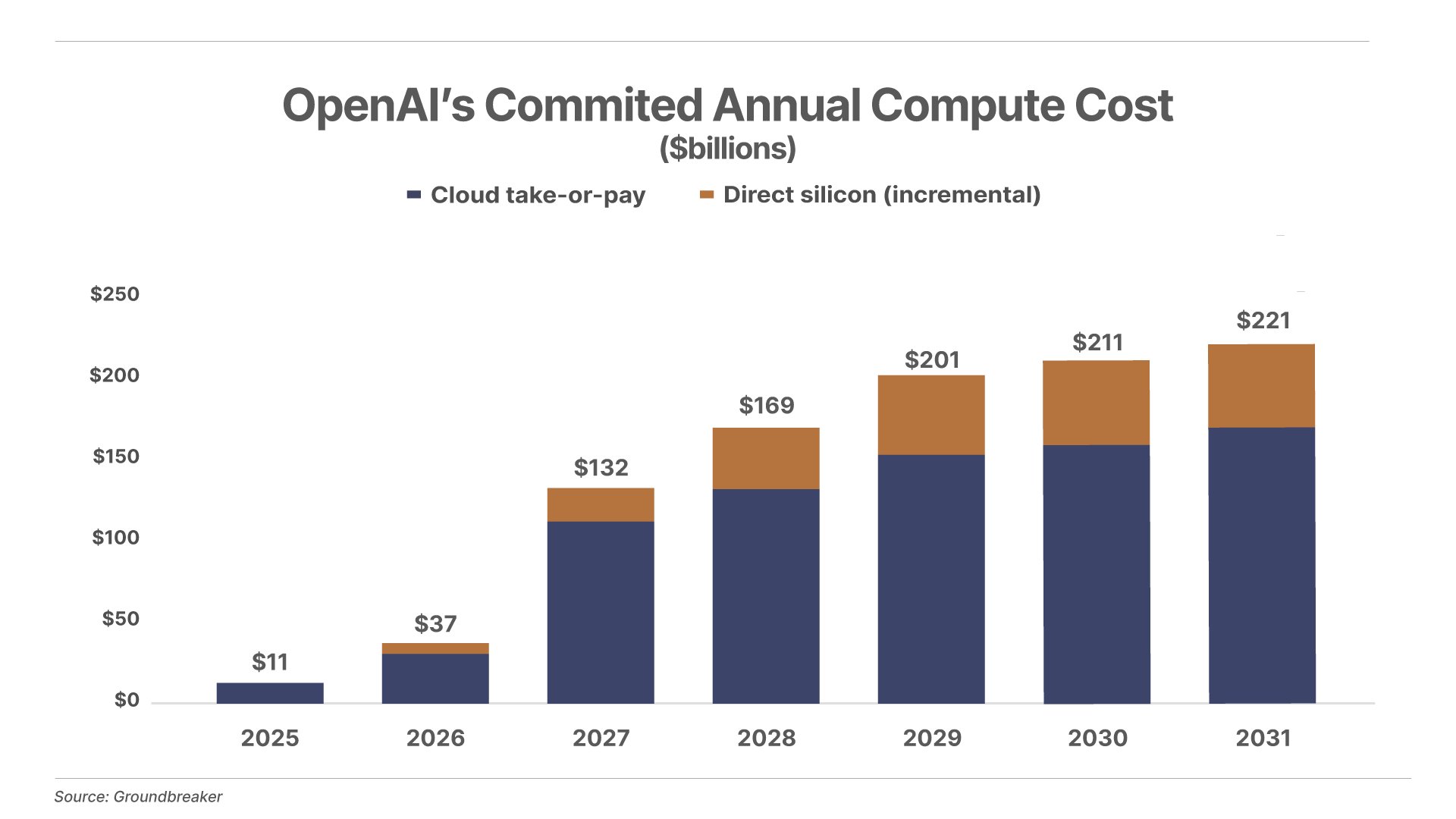 Source: Groundbreaker, via Porter & Co.
According to this study, annual computing costs could climb from approximately $37 billion in 2026 to $132 billion in 2027, eventually exceeding $200 billion.
These are projections, not bills already paid.
But they show the extraordinary scale of OpenAI's ambitions.
To complicate matters, OpenAI recently pushed its potential IPO into 2027 or later, with CEO Sam Altman citing concerns about “AI safety”.
That may be a real reason to wait.
But it also leaves OpenAI dependent on private investors and other financing sources for longer.
Another analysis from Bridgewater Associates models what happens without extra fundraising.
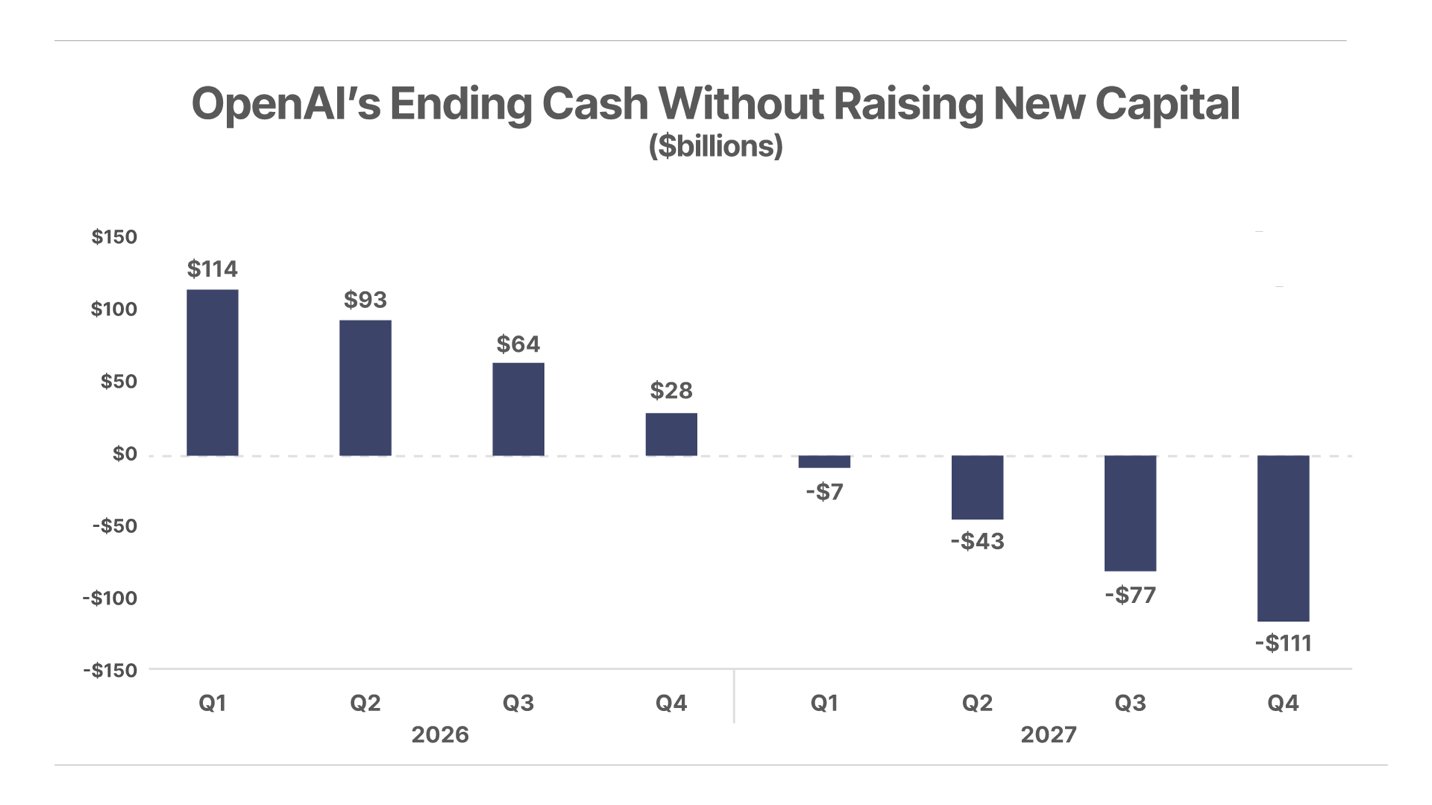 Source: Bridgewater Associates, via Porter & Co.
Under that scenario, OpenAI's cash balance turns negative in early 2027.
That doesn't mean bankruptcy is inevitable.
The model assumes no added capital and OpenAI has attracted strong backers.
But it shows how dependent the company's expansion remains on financing.
And that dependence extends far beyond OpenAI itself.
The Money Behind the Money
OpenAI doesn't build every data center or buy every chip directly.
It signs agreements with cloud providers and infrastructure companies that build facilities, purchase equipment and supply computing power.
Those companies often borrow heavily to pay for construction.
Some of the industry's largest suppliers are helping fund projects that ultimately buy their products.
NVIDIA, for example, has reportedly agreed to provide guarantees of up to $105 billion connected to an Ohio data center project serving OpenAI.
That doesn't mean NVIDIA has already spent $105 billion.
But its financial involvement extends far beyond that project.
According to NVIDIA's own legal filings, the company has disclosed approximately $530 billion in combined future financial commitments and potential guarantees across its supply chain and AI infrastructure ecosystem.
The following analysis shows the scale of these commitments.
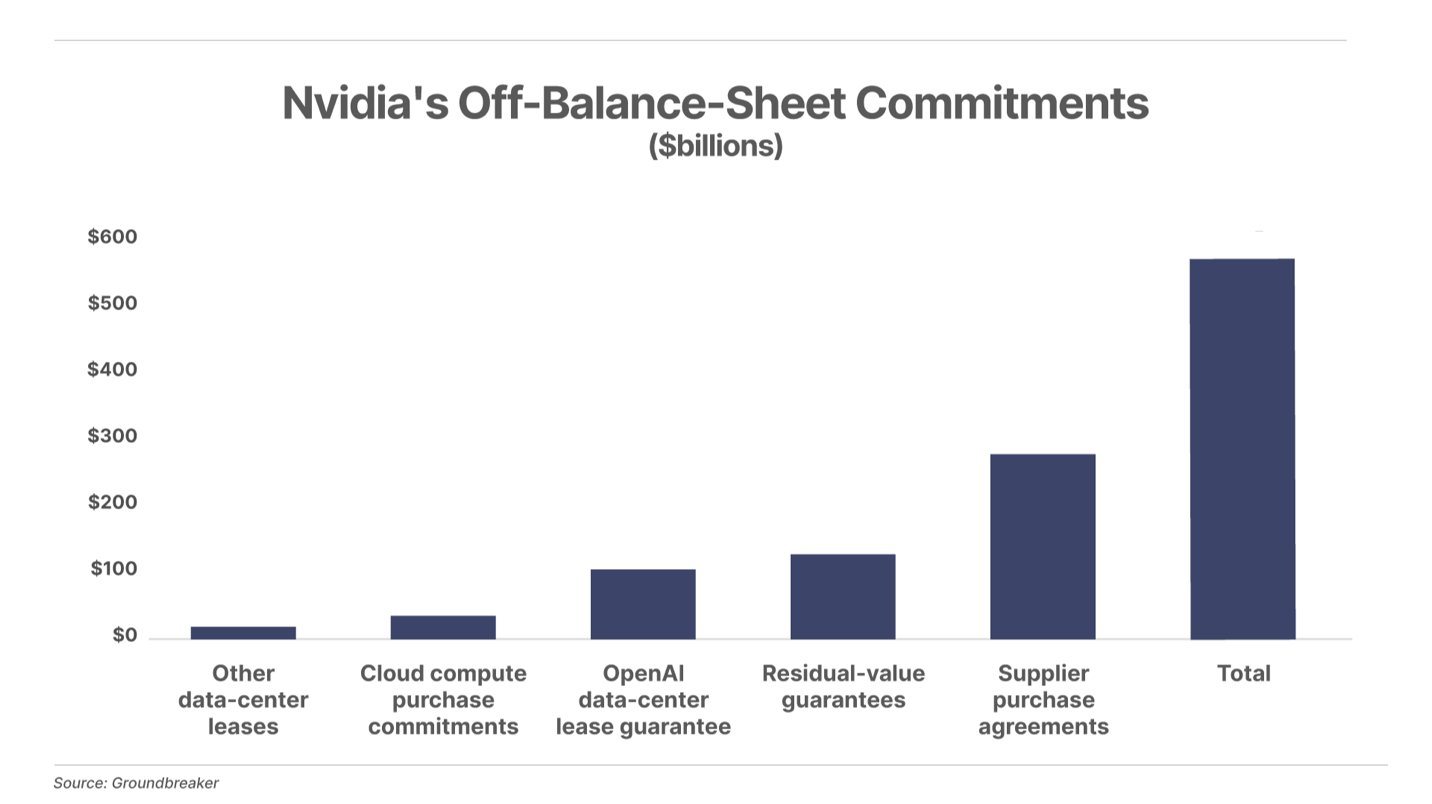 Source: Groundbreaker, via Porter & Co.
Importantly, these aren't $530 billion in debt or payments NVIDIA must make.
The figure combines future purchases, leases and potential guarantees. Some categories in the chart may also overlap.
But even with those caveats, it’s clear that NVIDIA has hundreds of billions of dollars riding on the continued expansion of AI infrastructure.
The company selling the chips is helping to finance the system buying them.
That makes the availability of capital part of NVIDIA’s growth story. And lately, that financing has become harder to obtain.
NVIDIA-backed data center developer Firmus recently abandoned its planned IPO after struggling to attract enough investor support.
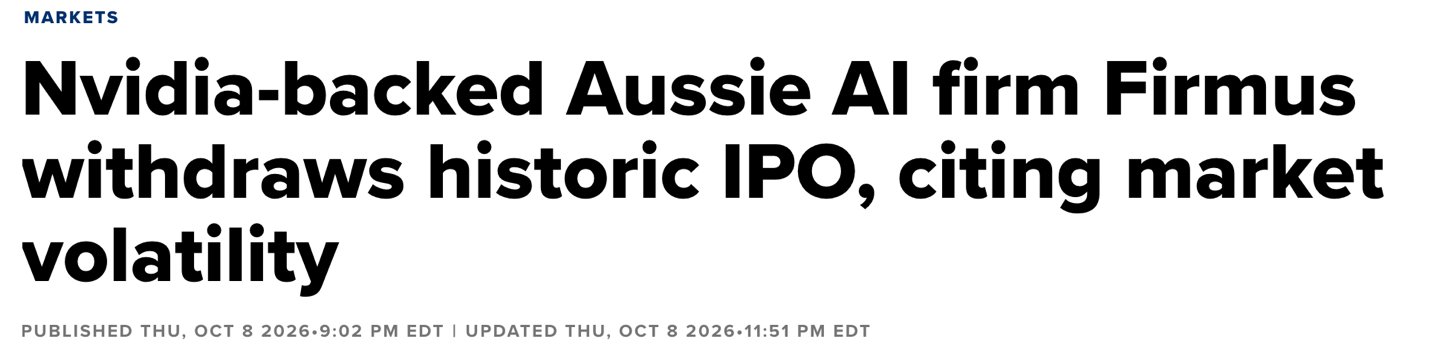 Source: CNBC
Blackstone-backed AirTrunk also reportedly postponed its planned $1.5 billion IPO.
Meanwhile, borrowing costs have risen for companies such as Oracle and CoreWeave, as investors demand greater returns for lending to them.
None of these developments proves the AI boom is ending.
But they suggest lenders and investors are becoming more selective about which projects they'll finance and at what price.
That's a serious concern for an industry dependent on a steady supply of new capital.
And OpenAI isn't alone.
Anthropic faces enormous computing requirements.
Oracle is spending a massive sum on infrastructure while carrying large financial obligations.
Meanwhile, cloud providers such as CoreWeave and Nebius are also investing heavily.
Their financial positions differ, but all face some exposure to capital costs and availability.
If several begin pausing projects or reducing equipment orders, the effects could spread quickly.
And few companies have more riding on continued AI infrastructure spending than NVIDIA.
NVIDIA: The Second Domino
NVIDIA is one of the AI era's greatest corporate success stories.
Its fiscal 2026 revenue reached approximately $216 billion, up 65% from the previous year.
In its latest reported quarter, revenue surged to $96.2 billion, with $89 billion coming from its data center business.
These are awesome results, don’t get me wrong.
But Wall Street is betting that NVIDIA's growth will continue for years.
NVIDIA Historical Revenue and Analyst Estimates Through Fiscal 2029
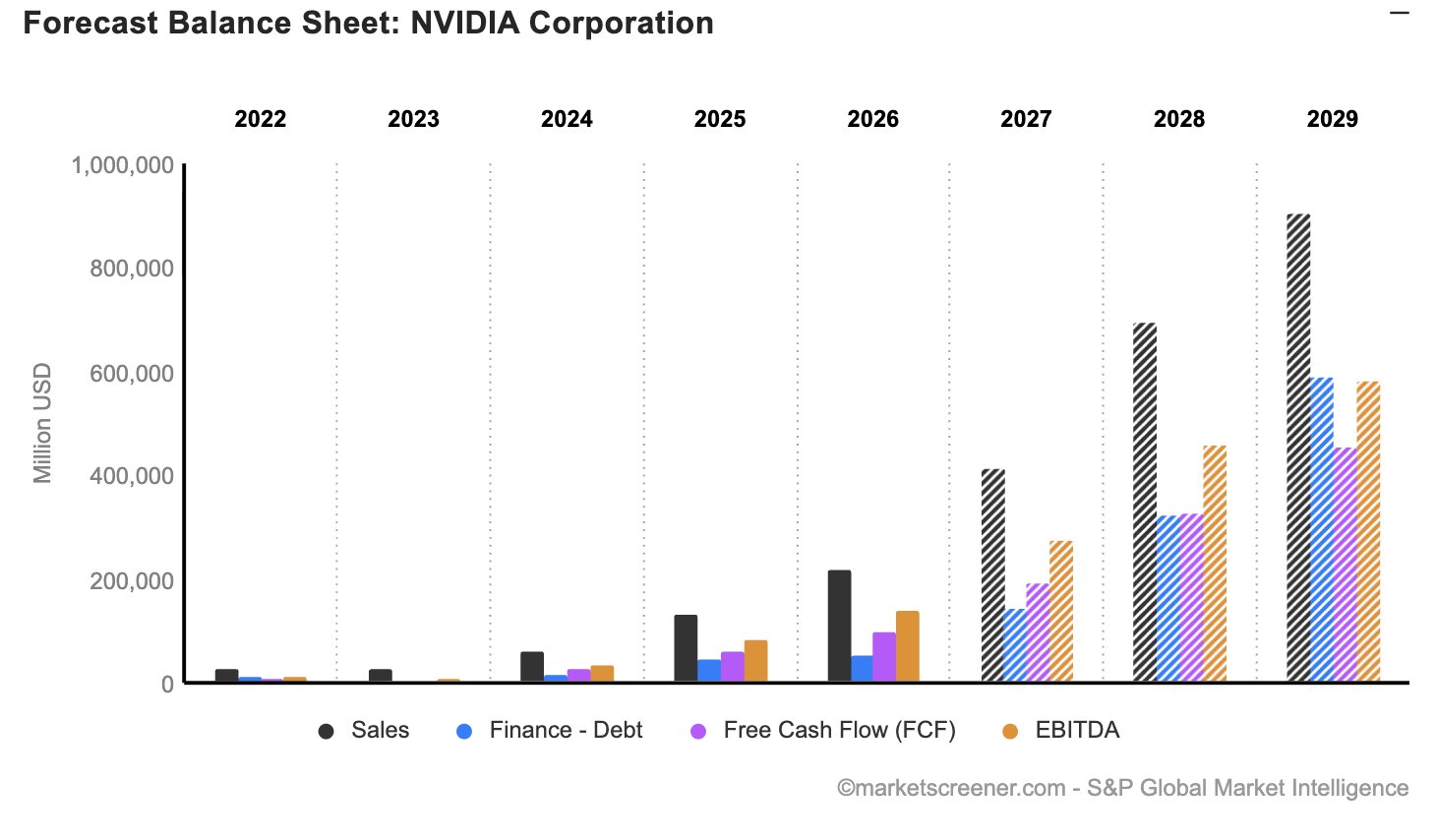 Source: MarketScreener
Look at how much more growth analysts expect.
That's where the risk lies.
Imagine several major data center projects are postponed by six months.
Those customers may still need NVIDIA's chips. But orders expected this quarter could shift to next quarter.
Now imagine similar delays across Oracle, CoreWeave and other infrastructure providers.
Even if AI demand remains strong, NVIDIA could miss Wall Street's revenue expectations.
There's still another threat developing inside its own customer base…
NVIDIA's Customers Are Becoming Competitors
Some of NVIDIA's biggest customers are spending billions to develop their own AI chips:
- Google has its TPUs.
- Amazon has Trainium and Inferentia.
- Meta has MTIA.
- Microsoft has Maia.
- OpenAI is developing custom silicon with Broadcom.
SpaceXAI, through its Terafab initiative with Tesla, plans to design and manufacture its own chips.
These companies want to cut costs, improve efficiency and rely less on NVIDIA.
That doesn't mean their chips will replace NVIDIA's products.
NVIDIA retains major advantages in performance, software and its broader computing ecosystem.
But consider what happens if its largest customers shift even a portion of future purchases toward their own chips.
NVIDIA could lose market share even as the overall AI industry continues growing.
And remember, the stock market is forward-looking.
Investors don't have to wait for NVIDIA's revenue to decline.
If Wall Street becomes convinced that future growth will slow, investors may pay less for each dollar of NVIDIA's expected earnings.
That means NVIDIA could deliver excellent results and still see its stock fall.
The Lesson Wall Street Keeps Forgetting
In January 2000, Lucent Technologies stunned investors with an earnings miss after 14 quarters in a row beating earnings expectations.
Its revenue was expected to fall roughly 29% short of Wall Street's forecast in large part because of changes in the timing of customer purchases.
The telecommunications revolution hadn't ended, but customers weren't spending when Wall Street expected them to.
Lucent's stock plunged.
NVIDIA is a very different company, with a stronger financial position and a strong competitive advantage.
The lesson, though, remains the same…
When investors expect massive growth, even a modest slowdown can cause large stock market losses.
Who Falls First?
Perhaps OpenAI secures all the financing it needs.
Oracle, Anthropic and the cloud providers may complete their expansion plans. And NVIDIA may continue beating expectations despite growing competition.
All of those outcomes are possible.
The concern is how dependent these companies have become on one another, especially when so much of the AI boom assumes that each will keep growing at an extraordinary pace.
Let me be clear here. I'm not bearish on AI.
I 100% believe the technology will continue to transform our economy and create great investment opportunities.
But given my three-plus decades of Wall Street experience, I also can't ignore the mounting evidence of financial strain across the industry.
Rising borrowing costs, delayed projects, troubled IPOs and growing competition are all warning signs worth taking seriously.
For investors, that doesn't mean ditching AI stocks. It means making sure your portfolio isn't 100% dependent on the AI boom continuing at its current pace.
Diversification matters and I'll discuss it in coming notes.
Other industries also offer solid opportunities.
And if the AI trade stumbles, investors with exposure beyond the sector may be better positioned to weather the downturn and take advantage of new opportunities.
Because the first warning may not come from a bankruptcy or a massive corporate failure.
It could come from a postponed project, a failed financing deal, or a disappointing earnings forecast.
Until then, remember, the AI house of cards doesn't need every company to fail.
It may only take a few to fall short of Wall Street's expectations.
Sign Up Today for Free!
Truth & Trends brings you market insights and trading tips you won't find anywhere else — unless you have your own personal hedge fund manager on speed dial...
Meet Enrique Abeyta, one of Wall Street’s most successful hedge fund managers. With years of experience managing billions of dollars and navigating the highs and lows of the financial markets, Enrique delivers unparalleled market insights straight to your inbox.
In Truth & Trends, Enrique shares his personal take on what’s moving the markets, revealing strategies that made him a star in the world of high finance. Whether it’s uncovering the next big trend or breaking down the hottest stocks and sectors, Enrique’s insights are sharp, actionable, and proven to work in any market condition.
Inside these daily updates, you’ll gain:
- 50 years of combined trading wisdom distilled into actionable insights.
- A behind-the-scenes look at how Wall Street pros spot opportunities and avoid pitfalls.
- Exclusive strategies that Enrique personally uses to deliver exceptional returns — no fluff, just results.
To have Truth & Trends sent directly to your inbox every weekday, just enter your email address below to join this exclusive community of informed traders.
Don’t miss your chance to learn from one of the best in the business.
Sign up now and take your trading game to the next level.

The AI House of Cards: Wall Street’s Trillion-Dollar Bet
Posted October 12, 2026
By Enrique Abeyta

AI Is Now “Too Big to Fail”
Posted October 08, 2026
By Enrique Abeyta

MU Are You Ok? Are You Ok MU?
Posted October 07, 2026
By Nick Riso
Micron Could Get Cut in Half. Here’s Why.
Posted October 05, 2026
By Enrique Abeyta

The AI “Mega-Theme” Nobody’s Talking About Yet
Posted October 02, 2026
By Greg Guenthner