
Posted March 30, 2026

By Enrique Abeyta
Iran: Fast Checkmate, But Maybe No Winner
In chess, there are points when the game isn’t over, but the outcome is already decided.
Checkmate — from the Persian shāh māt, meaning “the king is helpless” — is now inevitable.
That’s the point we’re at now in the Iran conflict.
As I said last week, I believe we are entering the final stages of the conflict.
I wrote to you describing how the U.S. could take a series of military actions to secure the Strait of Hormuz — possibly over the weekend.
While it didn’t happen as soon as I predicted, I’m even more confident now that they are about to happen.
The “Center of Gravity” Concept
Over the years, I have had a great interest in military history and tactics. But I haven’t spent nearly as much time as I would like studying them.
That’s mostly because they have not been particularly relevant to making money in the markets. Well, they are now.
So over the last few weeks, I’ve been devouring articles, blogs, and podcasts with experts.
Over the weekend, I listened to a former U.S. military officer talk about the writings of Prussian military theorist Carl von Clausewitz.

Clausewitz served in the Prussian army and fought in the Napoleonic Wars. His most famous work “Vom Kriege” (On War) is considered a must-read for military strategists.
One of his most important concepts is the idea of a “center of gravity.”
This is the idea that there are particular sources of the power of an enemy. It’s what drives and enables them to fight.
Remove that center of gravity, and you eliminate the will of the enemy and win.
In a revolution or uprising, it could be a leader or public opinion. In a war of regime change, it’s over the capital city and the major leadership.
Or in a war like this one, where you’re looking to degrade the enemy's ability to project power, it’s their capabilities.
Thinking of it from the point of view of Clausewitz’s “center of gravity,” I see three of them for Iran. They are:
- The ability to continue to fund their regime and military with oil exports.
- The ability to restrict/stop traffic in the Strait of Hormuz.
- The ability to destroy the oil production assets of the other Gulf states.
These are their major capabilities.
Removing Iran’s First Two Centers of Gravity
In my Thursday article, I outlined that the next move by the Trump administration is to go after the first two.
First, we mine the area around Kharg Island, which can be done by air or submarine. We can use smart and traditional mines, so we know where they are and can turn them on and off.
This means we can quickly allow the Iranians through if there is a deal.
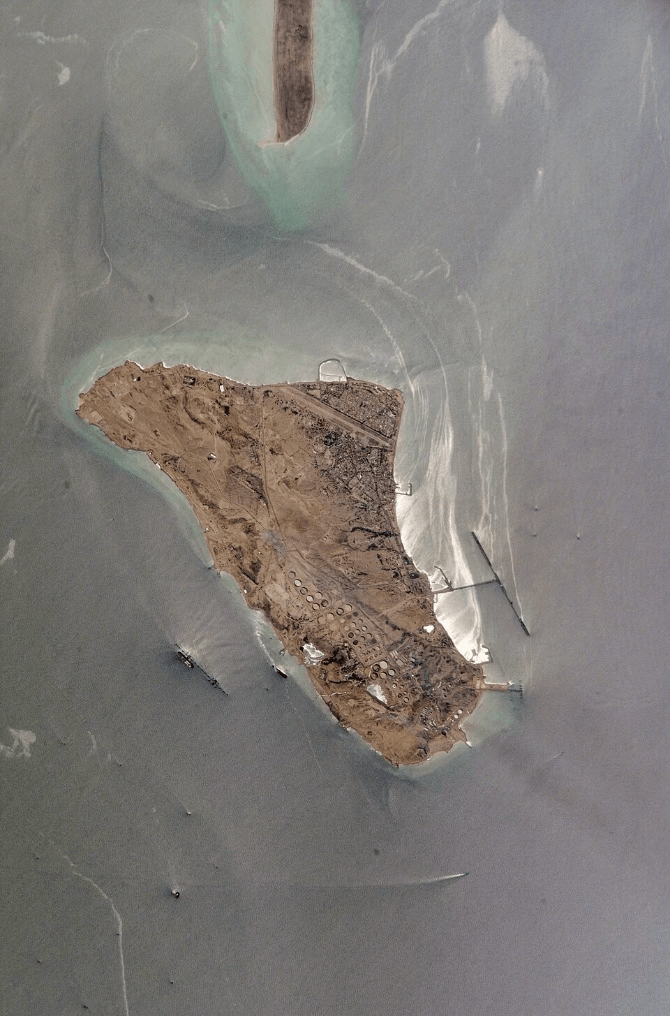
They have no air force or navy to stop us from making this move.
With one move, we prevent any ships from leaving Kharg with oil and not a single soldier in the group.
We don’t damage any production equipment or kill a single Iranian. Given the destruction of their anti-aircraft defenses as well, there might not even be a shot fired.
Obviously, I don’t think that will actually happen. But the point is that there is NOTHING they can do to stop this move.
Then, the U.S. and allies (European, Asian, and Gulf) blockade the area outside the Strait of Hormuz in the Gulf of Oman. We stop any Iranian oil that is already on the water.
If they can block everyone else’s oil, why can’t we block theirs?
Again, there is nothing Iran can do about this move. They have no navy.
Without a single soldier on the ground anywhere, we completely shut off their oil.
The first “center of gravity” is removed.
Next, we take those islands we discussed last week, Larak and the Abu Musa islands, and bomb them into absolute dust.
In this case, we might have some marines go in, but the boots will be hitting ground of dust by the time we are done bombing them.
These islands WILL be destroyed and secured. There is no way at all for Iran to stop it.
Once this is done, the allies (mostly the U.S.) move in with significant naval and air assets.
A-10 Warthogs and attack helicopters are great for knocking out drones and fast boats. 30mm autocannon rounds from an A-10s Gatling guns are a lot cheaper than Patriot missiles.
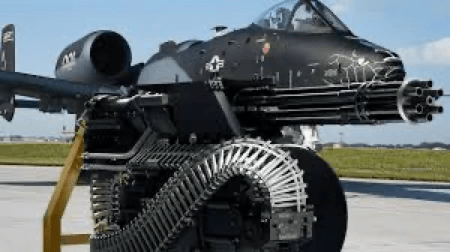
The naval ships also have significant capabilities and have not yet been utilized.
Will we be able to secure 100% of the traffic through the Strait of Hormuz after these moves?
No. During the 1984–1988 “Tanker War” period of the Iran-Iraq war, 55 oil tankers were either completely sunk or declared a total loss.
The USS Stark was hit by two Iraqi Exocet missiles, killing 37 sailors in May 1987.
Despite these attacks, estimates are that only 2% of the total traffic going through the Strait was disrupted.
We have not started ANY of these moves yet.
Why? Perhaps it was a miscalculation by the U.S. military.
More likely, the idea was to start the air campaign and see if we got “lucky” with regime change quickly. If we didn’t, we would move to the next steps, which are happening now.
Sorry, there is NO scenario where U.S. military strategists did not see this happening in the Strait of Hormuz.
Now that they have moved the assets in place, we remove the second “center of gravity.”
This is the point at which I think we will be as soon as next week.
That Just Leaves the Final Center of Gravity
Now, I am going to tell you something obvious that may sound surprising.
The Iranians already know everything that I wrote above — 100% of it.
Not because they have master spies, but because they also are smart military strategists.
So, what are they going to do about it?
The reality is that there is nothing they can do to stop the moves above.
Yes, there is no guarantee that the U.S. can get the Strait operational again, but the other moves can’t be prevented. Even the freedom of the Straits is highly probable.
As a result, it is my view that there’s a significant chance (40% probability) that we see a deal before the U.S. makes these moves.
The Iranians are at that point where they see the checkmate. They have to decide if they want to keep more of their pieces.
If there is no deal, these moves will happen within a week or two.
Then my view is that it is still a high probability (50%) that we see a deal.
What does a deal look like?
Impossible to say, but it will look a lot more like the U.S. 15-point deal versus the Ayatollah’s Santa wish list.
There will, however, be enough in there for the Iranians to save face. Trump is good at doing that for the folks on the other side of the table.
Expect a press conference that goes from calling the new religious leader “mini-me” to praising his negotiation skills.
In the scenarios I outlined above, I have put a 90% likelihood of a positive resolution in the next few weeks.
Importantly, the Iranian regime survives. An extremely weakened version, but they live.
Note, that leaves 10% of a negative solution. What does that look like?
Deprived of access to its oil and having lost its ability to restrict the Strait of Hormuz, Iran exercises its third “center of gravity.”
They destroy everyone’s oil production assets.
Can they do it? Absolutely.
I think it could happen in just a few weeks, but they could do this at any point.
What happens if they do this? Global oil prices will soar. Think $200, maybe even $300.
This would absolutely result in a global recession.
It will also result in a guarantee that the Iranian regime does NOT survive.
There is no scenario where the world backs down after such an event.
Cut off from oil, the regime falls into chaos.
Is this a terrible result for Iran? The Gulf? America? The world? Yes, it is.
That doesn’t matter, though; it’s where we are at this point.
Now, I am not trying to defend any of the moves above nor agree (or disagree) with what has happened or what we think will happen.
I am simply trying to figure out what WILL happen.
Bringing It All Back to the Stock Market
The whole reason for this exercise is not to engage in intellectual curiosity, but because it has a direct impact on the U.S. stock market.
If we see what I think is the most probable outcome, a peace agreement with a weakened Iran, I think markets will soar initially.
They may be volatile after that, but I wouldn’t be surprised to see new highs again by year-end. I can even see a “melt-up” in shares.
If we see the improbable outcome, it is the opposite. I think stocks could fall 20% or more from current levels.
What does that mean for stock investors?
For the long term, it doesn’t mean a whole lot. Stick with your investments and ride them out.
Remember that even in our worst-case scenario, we see an eventual cessation of violence and a return of that oil. Potentially with a much less aggressive Iran going forward.
For the short term, it presents opportunities and risks.
Fortunes can be made and lost in these types of markets. The key is to move quickly.
For all of us, buckle up and get ready for some volatility. Remember to keep cool and have a plan.
Sign Up Today for Free!
Truth & Trends brings you market insights and trading tips you won't find anywhere else — unless you have your own personal hedge fund manager on speed dial...
Meet Enrique Abeyta, one of Wall Street’s most successful hedge fund managers. With years of experience managing billions of dollars and navigating the highs and lows of the financial markets, Enrique delivers unparalleled market insights straight to your inbox.
In Truth & Trends, Enrique shares his personal take on what’s moving the markets, revealing strategies that made him a star in the world of high finance. Whether it’s uncovering the next big trend or breaking down the hottest stocks and sectors, Enrique’s insights are sharp, actionable, and proven to work in any market condition.
Inside these daily updates, you’ll gain:
- 50 years of combined trading wisdom distilled into actionable insights.
- A behind-the-scenes look at how Wall Street pros spot opportunities and avoid pitfalls.
- Exclusive strategies that Enrique personally uses to deliver exceptional returns — no fluff, just results.
To have Truth & Trends sent directly to your inbox every weekday, just enter your email address below to join this exclusive community of informed traders.
Don’t miss your chance to learn from one of the best in the business.
Sign up now and take your trading game to the next level.

Welcome to the Worst Possible Market
Posted March 27, 2026
By Greg Guenthner
![[48 Hours] One Step Closer to the Iran Endgame](http://images.ctfassets.net/vha3zb1lo47k/7o9bZ7e2QPeTe7qntxzXPc/71c43dd00c51b9ab72e63f054396cac7/ttr-issue-03-26-26-img-1.jpg)
[48 Hours] One Step Closer to the Iran Endgame
Posted March 26, 2026
By Enrique Abeyta

Ghost of the 1970s Is Back — Or Is It?
Posted March 23, 2026
By Enrique Abeyta

My Ultimate Trading Challenge “Cheat Sheet”
Posted March 20, 2026
By Greg Guenthner

Everyone Zigged… and the Market Zagged
Posted March 19, 2026
By Enrique Abeyta
