Posted November 04, 2026

By Zach Scheidt
IBM: The "Lose-Lose" AI Trade
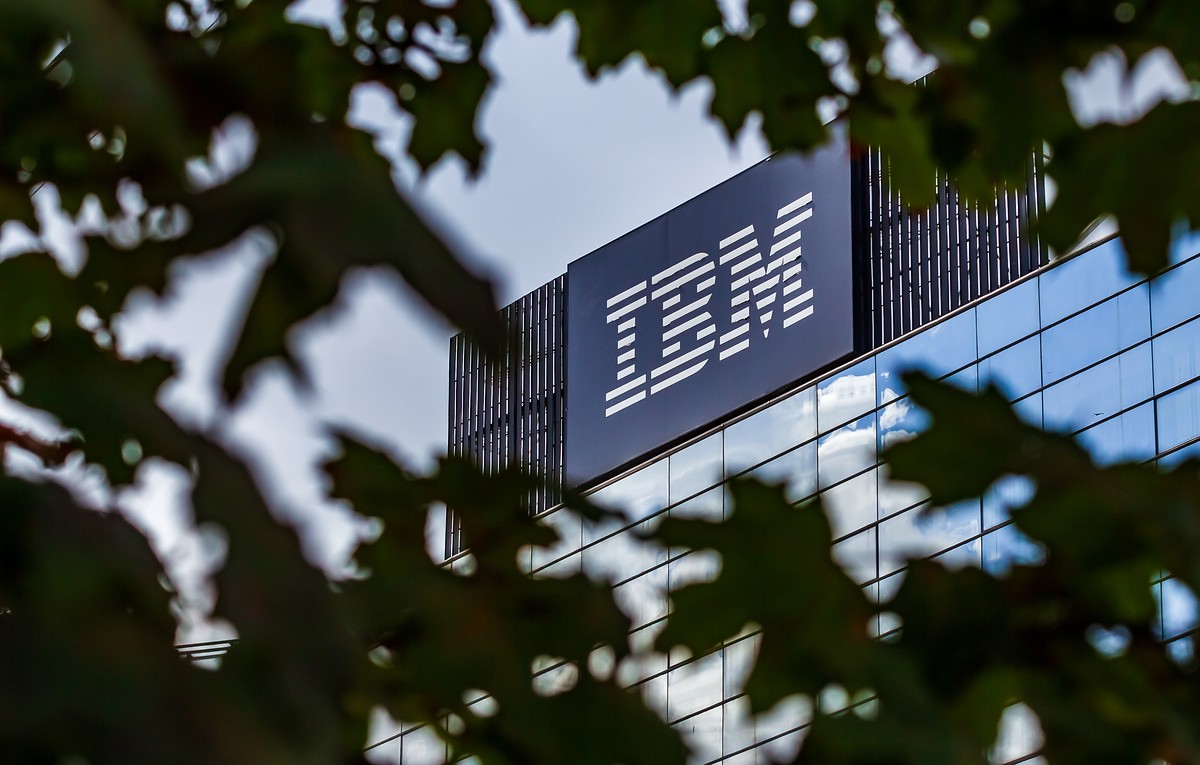
It survived the Great Depression, two World Wars, and the dot-com crash. But IBM may be facing its biggest challenge yet.
It looks like the company stands to lose whether the AI boom keeps going or ends tomorrow.
If AI spending keeps booming, customers shift their tech budgets toward AI and away from IBM's traditional businesses. IBM warned about exactly that in July, and the stock dropped 25%.
If confidence in AI cracks, on the other hand, IBM loses the AI premium baked into its share price.
We’ve already started to see companies crack as investors begin to doubt the AI trade.
Just last week, Alphabet had its worst day ever, losing about half a trillion dollars in value.
In October, the average S&P 500 stock rose 4.79% as money rotated out of big tech and into the rest of the market.
Now, back to IBM. The stock isn't wildly expensive. It trades for about 19 times next year's expected profits.
But revenue grew just 4.7% last quarter. For a company growing that slowly, 19 times earnings carries a bit of an AI premium.
And what really concerns me is that analysts have been revising their earnings expectations lower.
That's a bigger deal than it sounds. When estimates drop, stocks usually fall by a larger percentage.
Say a company is expected to earn $10 per share, and investors pay 20 times that. The stock trades at $200.
Now analysts cut their estimate 10% to $9. Investors don't just expect lower profits. They expect slower growth too, so they're only willing to pay 18 times earnings.
Some back-of-the-napkin math… $9 times 18 is $162. That 10% cut in expectations just knocked the stock down about 19%.
IBM gave us a warning sign a few weeks ago. On Oct. 21, the company beat expectations for the quarter, and the stock still fell about 5% after hours.
When good news can't lift a stock, we need to pay attention.
Today IBM trades around $253, and it's been moving sideways since that drop. I think the next move is lower.
While that’s bad news for IBM shareholders or anyone with exposure to it through index funds, the good news is that you can use options to profit from the stock’s downfall.
Here’s how…
The Smarter Way to Profit From a Falling Stock
A put option gives you the right to sell a stock at a set price, called the strike price, before a certain date.
When the stock falls, the put gains value.
The old-school way to bet against a stock is shorting it. You borrow shares, sell them, and hope to buy them back cheaper.
But shorting comes with real problems.
Your losses are unlimited if the stock keeps climbing. Your broker can also hit you with a margin call.
And you have to pay the dividend to the person you borrowed the shares from. (IBM pays a healthy one.)
With a put, the most you can lose is what you paid for it. No margin calls. No dividend payments.
But not all puts are created equal.
Out-of-the-money puts are inexpensive, but they’re cheap for a reason. Most of their price is time premium, and that premium melts away a little every day.
The stock has to fall far and fast just for you to break even.
An in-the-money put works differently.
I want a put that moves roughly $0.75–$0.80 for every dollar IBM moves lower. So it behaves a lot like a short position when the stock falls.
But if IBM rallies, the math shifts in my favor. The farther the stock climbs, the less I lose for each additional dollar it moves higher.
And because an in-the-money contract doesn't carry as much time premium, I don't have to worry as much about time decay eating away at my position while I wait for the trade to work.
Full disclosure, I own in-the-money IBM puts in my Income Alliance portfolio right now.
(I won’t share the strike or entry price here. That's for subscribers, who get my trade alerts in real time.)
But the concept is what matters. And you can use it on any stock you expect to fall.
“Extending Your Downwind” for More Time
I’m a pilot, and I often see similarities between flying a plane and trading.

For example, when you're coming in to land, you fly a rectangle around the runway called the traffic pattern.
The "downwind" leg runs parallel to the runway, in the opposite direction you'll land.
Sometimes the tower needs a little more spacing between planes. So they'll tell you to "extend your downwind."
You don't change runways or your plan. You just fly a little farther before you turn in, giving yourself more time to land.
That's how I'm thinking about my IBM puts.
Let’s say my puts expire in November. If IBM drifts lower slowly instead of dropping quickly, I may extend my downwind.
That would mean selling the November puts and buying puts with a December expiration. Same trade idea, just more time for it to work.
And if IBM keeps moving higher?
Then I'd have a tough decision to make. Most likely, I'll go around and take my capital to a different stock with a better setup.
The key is deciding that before the trade goes against you. Pilots brief their go-around before they ever start the approach — traders should too.
Before I go, I promised you a follow-up on the last trade that I wrote to you about.
A Quick Update on My Amazon Trade
Last week, I walked through five ways to trade Amazon heading into earnings.
I told you I owned a bullish position in my Income Alliance portfolio and asked you to guess which one.
The answer: an in-the-money call.
Amazon reported earnings last week. Investors balked at the company's massive AI spending, and the stock pulled back.
That's exactly the kind of moment an in-the-money call is built for.
An out-of-the-money call would have lost most of its value on that drop. My in-the-money call kept more than half its value.
And if Amazon had rallied instead, it would have captured most of the move higher.
Now Amazon is bouncing. I haven't closed the trade yet, but my hand is on the throttle.
Next week, I'll talk about something called “the touch-and-go.” It’s how you butter the landing on a winning trade and climb right back out.
In the meantime, I'd love to hear from you.
Tell me one stock you'd like me to break down. Just send in an email, and I may feature it in an upcoming issue.
Sign Up Today for Free!
Truth & Trends brings you market insights and trading tips you won't find anywhere else — unless you have your own personal hedge fund manager on speed dial...
Meet Enrique Abeyta, one of Wall Street’s most successful hedge fund managers. With years of experience managing billions of dollars and navigating the highs and lows of the financial markets, Enrique delivers unparalleled market insights straight to your inbox.
In Truth & Trends, Enrique shares his personal take on what’s moving the markets, revealing strategies that made him a star in the world of high finance. Whether it’s uncovering the next big trend or breaking down the hottest stocks and sectors, Enrique’s insights are sharp, actionable, and proven to work in any market condition.
Inside these daily updates, you’ll gain:
- 50 years of combined trading wisdom distilled into actionable insights.
- A behind-the-scenes look at how Wall Street pros spot opportunities and avoid pitfalls.
- Exclusive strategies that Enrique personally uses to deliver exceptional returns — no fluff, just results.
To have Truth & Trends sent directly to your inbox every weekday, just enter your email address below to join this exclusive community of informed traders.
Don’t miss your chance to learn from one of the best in the business.
Sign up now and take your trading game to the next level.

The Big Split Behind This Year's Market
Posted November 03, 2026
By JC Parets

The Election Is Coming! Sell Everything! (Just Kidding)
Posted November 02, 2026
By Enrique Abeyta
You Gotta Be Quicker Than That!
Posted October 30, 2026
By Greg Guenthner
NVIDIA: The Biggest Stock Massacre in History
Posted October 29, 2026
By Enrique Abeyta

5 Ways to Play Amazon's Earnings (I Made My Bet)
Posted October 28, 2026
By Zach Scheidt