Posted November 06, 2026

By Greg Guenthner
Big Tech Wants Inside Your Head
It’s Friday night. You’re on the couch, half watching the game, when your stomach starts making demands. Pepperoni. Extra cheese. Maybe some garlic knots.
You don’t pick up your phone. You don’t say a word. You don’t even finish the thought. But somehow, just thinking about pizza is enough to place your order.
Twenty minutes later, there’s a knock at the door.
Crazy? Maybe.
But to understand how we could get there, we have to go back nearly two decades.
Domino’s Pizza nearly died in 2009. Better pizza got the credit for the comeback. It was only half the story.
The financial crisis had the whole market reeling, and Domino’s had bigger problems. The company’s stock had fallen as much as 90% over the previous two years. Sales were in the gutter.
The granddaddy of the “30 minutes or less” pizza delivery guarantee looked as if it might never recover.
Then came the turnaround.
The storied pizza chain ran a brilliant advertising campaign featuring corporate executives reading scathing customer reviews. “Domino’s pizza crust tastes like cardboard. The sauce is just ketchup. Processed cheese! Totally void of flavor.”
In response to the critics, Domino’s completely revamped its pizza recipe.
The commercials (and the new pizza!) were a hit, and sales exploded. By the time turnaround-orchestrator CEO Patrick Doyle stepped down in 2018, Domino’s had recorded 28 straight quarters of same-store sales increases. The stock also started winning again. Shares rose from $8 in 2009 to more than $200 by mid-2017.
Most casual observers credited better pizza. That’s partly true. Make a better product, and customers will buy it. But there’s a bigger reason Domino’s was able to sustain its success, and it was hiding in plain sight.
Domino’s ditched the fast-food business and became a tech company.
The Pizza Tracker Was the Real Product
What most folks don’t remember is that Domino’s was at the forefront of restaurant tech innovation during the “Web 2.0” revolution more than 15 years ago, back when most restaurants thought a website was a place to post the menu.
The company pioneered a modern online ordering platform that included its famous pizza tracker — a feature still in use today that follows your order from the prep table to your house.
It also got employees off the phones and back to making pizza.
Domino’s goal was to remove all friction from the ordering process. Its real product was less friction. It was one of the first chains to sync with Amazon’s Alexa, and you could order from Twitter or Facebook.
Favorite orders were saved on your pizza profile for one-click ordering. Thanks to Domino’s technology, it became insanely easy to stuff your face with your favorite pie.
Nowadays, nearly every food experience runs on ideas Domino’s helped popularize, and entire companies like DoorDash are built around them.
In fact, I can’t remember the last time I ordered a quick bite from an actual human. It’s all kiosks, touchscreens and apps. Restaurants can’t survive anymore without using tech to the fullest.
And the same idea is now reshaping entire industries.
Remove the friction. Make something difficult almost effortless. And suddenly, you change how people do things.
Phase Two Is AI
Domino’s becoming a tech company was phase one. In the 2000s, everything (yes, even fast food) needed to become a tech company to survive.
Now we're entering phase two. And this time, the technology isn't just changing how we order pizza. It's changing how we interact with computers themselves.
Artificial intelligence is removing barriers that once seemed impossible to overcome. But drug discovery is only the beginning of what happens when AI meets biology.
Wall Street is already betting on one part of this transformation. I’ve talked before about the biotechnology acceleration and the young breakouts posted by biotech and genomics stocks.
One key takeaway was a major market rotation out of overextended semiconductor and memory stocks and into the highest-beta names in the healthcare sector: biotech and genomics.
Biotech has held up relatively well, especially with investors more conscious of inflation concerns and rising rates — an environment that’s usually quite toxic to smaller, more speculative stocks that need to raise capital often to survive.
We can already feel the hype of AI drug discovery building in the markets. The AI-driven cancer vaccine from Moderna, Inc. (MRNA) for late-stage melanoma launched a one-day, triple-digit rally in the stock.
And Moderna hasn’t slowed down since the August announcement. Shares are now higher by as much as 312% since the day before the news broke.
But there's another frontier opening up, and it has nothing to do with developing drugs. It's the connection between your brain and the computer.
Big Tech’s Next Move
Andrew Huberman made waves last month when he appeared on the Invest Like the Best podcast with Patrick O’Shaughnessy.
The sometimes controversial Stanford neuroscientist raised eyebrows when he said he believes some of the biggest tech firms in the world will soon become biotechnology companies.
No, this doesn’t mean Google will be developing next-generation breakthrough medicines. Instead, Huberman claims Meta Platforms Inc. (META), Anthropic and their competitors are going to pivot to neuroscience and the art of reading your mind.
It’s a controversial idea. And while some industry analysts are downplaying these predictions, others see big potential.
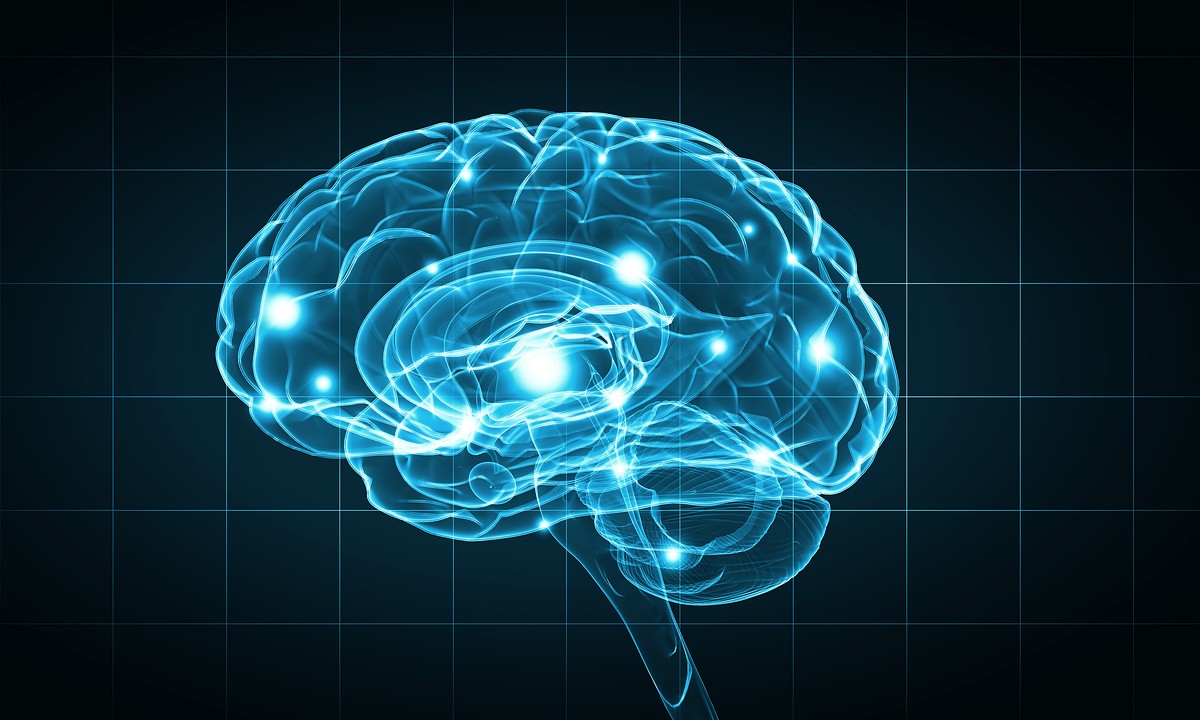
“AI labs are not colliding with biology because they want to build traditional pharmaceuticals,” The Thinking Engineer writes on Medium. The human brain, the writer argues, is the narrowest pipe between you and a computer, and the last big source of data left to tap.
The Last Friction
Think of AI as a friction remover. It breaks down the barriers and streamlines the processes that were once difficult or time-consuming.
Building a website? Spend years learning to code. Or have AI do it for you from a few simple inputs.
Scheduling a complicated job like a home renovation?
Spend countless hours on the phone with architects, contractors, laborers and your local planning and zoning commission. Or have your AI agent handle the planning and hiring.
One piece of friction is still left: you have to tell the machine what you want. You type it or say it out loud.
The brain is the last bottleneck. Brain-computer interfaces shrink the gap between thinking and acting.
If Huberman is right (and I think he’s onto something big here), the computer nerds are going to give way to the neuroscientists. They’re already starting to remove that last bit of friction between your thoughts and the machine.
The new age of tech will come down to knowing what we want before we even ask for it.
And unless I’m mistaken, everyone wants pizza.
That’s a future worth getting excited about. The market is already pricing the first half of this story. The brain half has barely started.
And that's where investors should start paying attention.
The first wave of AI rewarded the companies building the computing power. The next wave could reward those figuring out how humans interact with it.
I'm watching the companies developing brain-computer interfaces, the technology that makes those connections possible, and the tools needed to turn brain signals into something a machine can understand.
We're still early. There's no guarantee which approach wins, or which companies will turn this technology into a profitable business.
But if the brain really is the last bottleneck between humans and AI, removing it could create an entirely new category of tech winners.
Sign Up Today for Free!
Truth & Trends brings you market insights and trading tips you won't find anywhere else — unless you have your own personal hedge fund manager on speed dial...
Meet Enrique Abeyta, one of Wall Street’s most successful hedge fund managers. With years of experience managing billions of dollars and navigating the highs and lows of the financial markets, Enrique delivers unparalleled market insights straight to your inbox.
In Truth & Trends, Enrique shares his personal take on what’s moving the markets, revealing strategies that made him a star in the world of high finance. Whether it’s uncovering the next big trend or breaking down the hottest stocks and sectors, Enrique’s insights are sharp, actionable, and proven to work in any market condition.
Inside these daily updates, you’ll gain:
- 50 years of combined trading wisdom distilled into actionable insights.
- A behind-the-scenes look at how Wall Street pros spot opportunities and avoid pitfalls.
- Exclusive strategies that Enrique personally uses to deliver exceptional returns — no fluff, just results.
To have Truth & Trends sent directly to your inbox every weekday, just enter your email address below to join this exclusive community of informed traders.
Don’t miss your chance to learn from one of the best in the business.
Sign up now and take your trading game to the next level.
OpenAI Is the Next Bear Stearns
Posted November 05, 2026
By Enrique Abeyta
IBM: The "Lose-Lose" AI Trade
Posted November 04, 2026
By Zach Scheidt

The Big Split Behind This Year's Market
Posted November 03, 2026
By JC Parets
The Election Is Coming! Sell Everything! (Just Kidding)
Posted November 02, 2026
By Enrique Abeyta
You Gotta Be Quicker Than That!
Posted October 30, 2026
By Greg Guenthner